




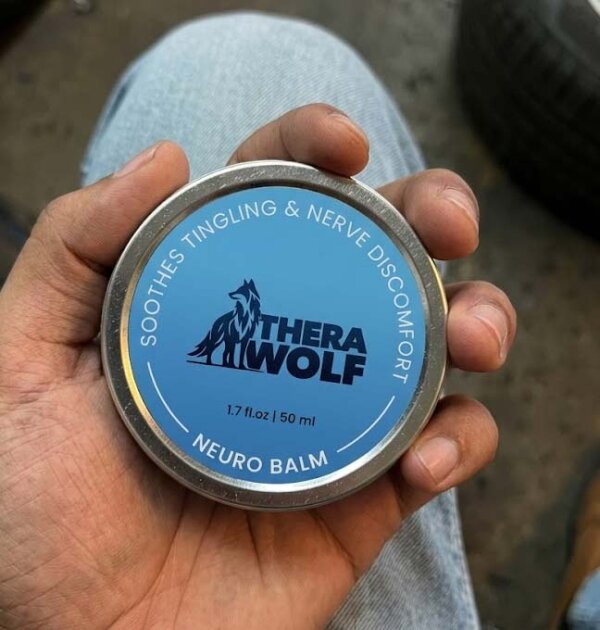
If you suffer from migraines – occasional or constant, mild or completely debilitating – read this before you take another painkiller or book another appointment. My name is Dr. Patricia Carmichael. I’m a neurologist from Portland, Oregon, and I’ve had migraines since I was 29. I know what your mornings look like. The few seconds after you wake up, when you’re checking – is today a migraine day? What it’s like to cancel plans and not tell the truth about why. To watch your world quietly get smaller as you build your life around a condition that never fully goes away. I also spent 25 years as a neurologist treating migraine patients. And almost everything we tell you to try only manages the pain. It doesn’t touch the reason the pain keeps coming back. It took me twenty-five years to understand why. But I also found something that actually addressed it. A migraine isn’t just pain. It’s a full nervous system event – and every attack leaves your nervous system slightly more wound up than before. The bar for the next one drops a little lower. Attacks get more frequent. Recovery gets longer. Eventually, your brain stops fully calming down between attacks at all. At the root of this is something almost no doctor tests for. Something so simple it almost seems too simple. Magnesium. Magnesium is your nervous system’s natural off-switch for pain signals. When levels are healthy, your brain can shut the signal down. When they’re depleted, that off-switch stops working. And chronic migraine sufferers are almost universally running low on magnesium. Now think about every trigger you’ve ever been told to avoid. Wine, weather, stress, screen glare. Those things aren’t causing your migraines. They’re just setting off a nervous system that was already primed to fire because the real problem was never addressed. Here’s what happens when it stays unaddressed: Year 1 – Attacks arrive once or twice a month. OTC medication handles it. You start quietly rearranging your life around triggers. Years 2–3 – Frequency climbs. You get prescribed stronger medication. You’re using it more and more often. The gaps between attacks get shorter. Years 3–5 – The medication itself becomes part of the problem. Take painkillers too regularly and your brain adapts by becoming even more sensitive to pain. You’re now getting headaches caused by the very thing you’re taking to stop them. 5+ Years – Your nervous system has been in overdrive for so long it’s now hair-trigger reactive to almost everything. Light, sound, hunger, a change in the weather. Standard treatments stop working. The options left are harder, more expensive, and less reversible. This isn’t the worst case. For millions of people, it’s just a matter of time. And the most commonly recommended options only deal with part of the picture. The first thing most people reach for. And they are fine for occasional migraines. The problem starts when you’re reaching for them regularly. Take painkillers ten or more days a month, and your brain starts expecting them. To compensate, it cranks up its sensitivity to pain. Now you’re getting headaches that the painkillers themselves are causing. Doctors call it medication-overuse headache. Most people who have it have no idea it’s happening. They just know their migraines are getting worse, and nothing is helping as much as it used to. Meanwhile, the underlying problem hasn’t been touched once. Triptans are the strongest migraine medication most people get prescribed. For stopping an attack that’s already underway, they’re the best option available. But they only work on the attack in front of them. The nervous system that keeps generating attacks is completely unaffected. And like OTC painkillers, use triptans too often, and the same trap springs. Many patients find themselves waking up the morning after a triptan with another attack already building. So they take another one. The cycle tightens until there’s barely a gap between attacks at all. Beta-blockers, anti-seizure drugs, antidepressants – all prescribed off-label to try to reduce how often migraines hit. They work by broadly turning down nervous system activity. The trouble is, you can’t turn down just the migraine part. Patients commonly report feeling tired all the time, mentally foggy, emotionally flat, and heavier than usual. Many stop taking them within a year because they’re making daily life harder in a different way. And none of them addresses the magnesium deficiency. None of them reduces the underlying irritability that keeps migraines coming. For people having fifteen or more migraine days a month, Botox is sometimes offered as a preventive treatment. It’s injected at 31 sites on the scalp, forehead, temples, and neck every 12 weeks, with the goal of partially blocking nerve signals that trigger an attack. For some patients, it helps. For others, it does very little. And there’s no reliable way to know in advance which you’ll be. Plus, it means regular clinic visits indefinitely. Private treatment runs $400-$600 a session. And again, the underlying problem keeps progressing regardless. The newest class of migraine prevention drugs and the most targeted yet. They block a specific protein involved in triggering the pain response, and for some chronic migraine sufferers, they can make a real difference. But they’re expensive – often over $500 a month out of pocket – and they’re generally only prescribed to people already classified as chronic migraine patients. If you’re having frequent but not daily attacks, you likely won’t qualify. And even for those they do help, they’re managing how often the attacks fire. Not why they keep firing in the first place. ⚠️Every one of these only addresses the migraine event. Not one addresses the nervous system state that keeps producing them. I prescribed most of these for years. I used several myself. There’s a particular kind of defeat in sitting in your own darkened room at 3 am, in the career you built around understanding this condition, feeling a triptan wear off with another attack already building behind it. I knew exactly what was happening neurologically, but I just had nothing left to offer myself. That’s when I stopped following the guidelines and went back to the primary research. Magnesium pills were something I’d recommended for years. The problem is that, taken orally, very little of it actually reaches the nerve tissue that needs it most. Then I came across research showing that magnesium applied directly through the skin bypasses that problem entirely. But I wasn’t just looking for magnesium. I needed a full formula – something that addressed the inflammation, the nausea, the nerve damage that builds up over years all at once. Most products I found were built around surface relief. TheraWolf Neuro Balm was the only one where every ingredient had a specific neurological reason to be there. 🌿 Magnesium Chloride 🌿 Peppermint Oil 🌿 Lavender Oil 🌿 Ginger Oil 🌿 MSM 🌿 Vitamin B6 🌿 Sea Buckthorn I worked it into my temples, across my forehead, and into the base of my skull where my tension always starts. Twenty minutes later, the pressure that had been building behind my right eye had backed off. I sat with that for a moment. In twenty-five years of treating migraines and living with them, I hadn’t felt anything do that without a prescription. My migraines have not disappeared completely, I want to be honest about that. What has changed is almost everything else. In the six months since I began using TheraWolf Neuro Balm as part of a daily routine, this is what is different: The Daily Background Pain Is Gone: Attacks Are Rarer and Shorter: I’ve Stopped Relying on Triptans: My Sleep Has Changed: Light and Sound No Longer Run My Life: I Gave My First Conference Talk in Two Years: If you’re skeptical, I understand that completely. Especially if you’ve already been through the cycle of trying things that didn’t work. But TheraWolf does work. Here is what others are reporting: The nervous system becomes harder to calm, the treatments that work today become less effective, and the gap between attacks slowly closes. I know what it costs. The events you cancel before you’ve even agreed to them. The plans built around a dark room. The version of yourself that existed before any of this started. None of it has to keep going. TheraWolf is offering 70% off through their official website right now. I got the 3-jar bundle because I didn’t want to run out. And consistent daily use is what actually changes how often migraines hit, not just how you feel during one. I strongly advise ordering from the official website only. The ingredients and how they’re combined are what make it work. Imitations won’t give you the same results. Check to see if TheraWolf Neuro Balm is still available>>> As of July 18, 2025 – TheraWolf Neuro Balm is selling fast, thanks to strong reviews and word of mouth. To keep up with demand, the company is offering a one-time 70% discount for first-time buyers. NOTE: This product is NOT available on Amazon or eBay.
What’s Actually Happening Inside the Migraine Brain – And Why It Gets Harder to Treat Over Time
1. OTC Painkillers

2. Triptans

3. Daily Preventive Medications

4. Botox Injections

5. CGRP Inhibitors
The Approach Nobody in My Field Was Talking About That Relieves Migraines in Minutes
The form of magnesium best absorbed through the skin. Restores the natural off-switch for pain signals that migraine brains are most commonly missing.
A published clinical trial found that topical peppermint delivered the same pain relief as 1000mg of paracetamol within 15 minutes. And the cooling sensation isn’t just for comfort, it actively blocks the pain signal at its source.
Clinically shown to reduce migraine severity and duration. It calms the nerve inflammation that keeps an attack going.
For many sufferers, the nausea is as bad as the headache. Ginger is a natural anti-inflammatory that also directly settles the nausea response.
Helps repair nerve tissue under chronic stress, and drives the other ingredients deeper into the skin.
Essential for producing the brain chemicals that keep your nervous system calm. Chronically low in migraine sufferers.
Supports the health of the protective layer surrounding nerve cells.Six Months On – This Is What My Life Looks Like Now
I had lived with a constant dull pressure in my temples for so long that I’d stopped noticing it. I didn’t realize how much of my energy it was quietly draining until it was gone.
I still get migraines. But where they were hitting every four to five days, I now average one, maybe two a month. When they do come, they’re over in hours, not days.
I was refilling my prescription every month. I’m now three months into the same supply. The trap I was stuck in – taking medication that was making me need more medication – has finally broken.
Migraines disrupt sleep, and poor sleep triggers migraines. Once the attacks eased up, I started sleeping better, and better sleep meant fewer attacks. I hadn’t realized how stuck in that loop I was.
I can sit in a restaurant. I can go to my grandson’s football games. I can open the curtains in the morning without bracing myself. These are not small things.
I’d quietly stopped accepting invitations because I couldn’t trust myself not to cancel. Last month, I presented to 200 people without a single moment of worry about my head.Here’s What Other Migraine Sufferers Are Experiencing After Using This Balm
You’ve Already Given This Condition Enough – Don’t Lose 25 Years to Migraines Like I Did






 Like
Like Comment






Customer Ratings
Average based on 9,803 reviews
 Excellent


